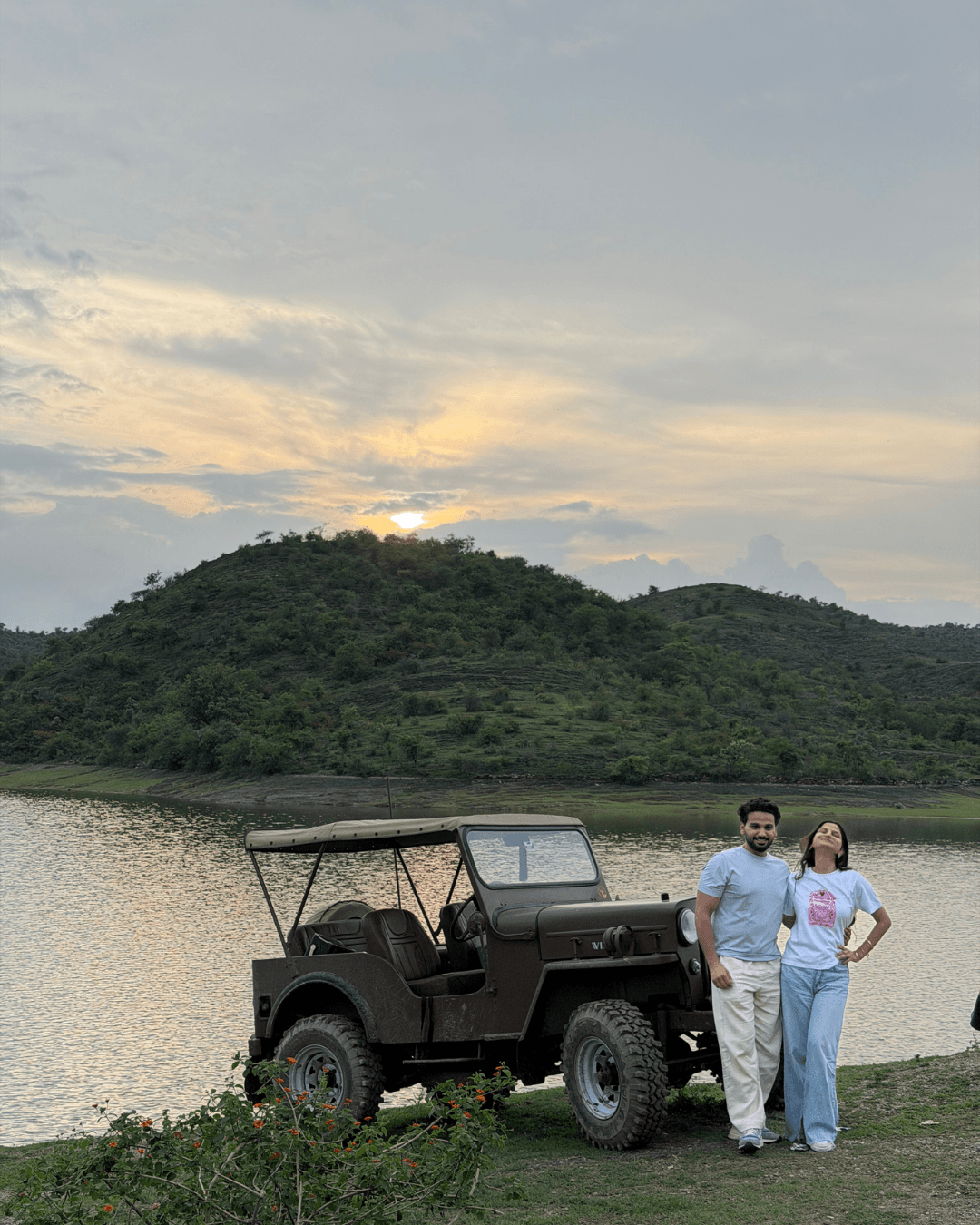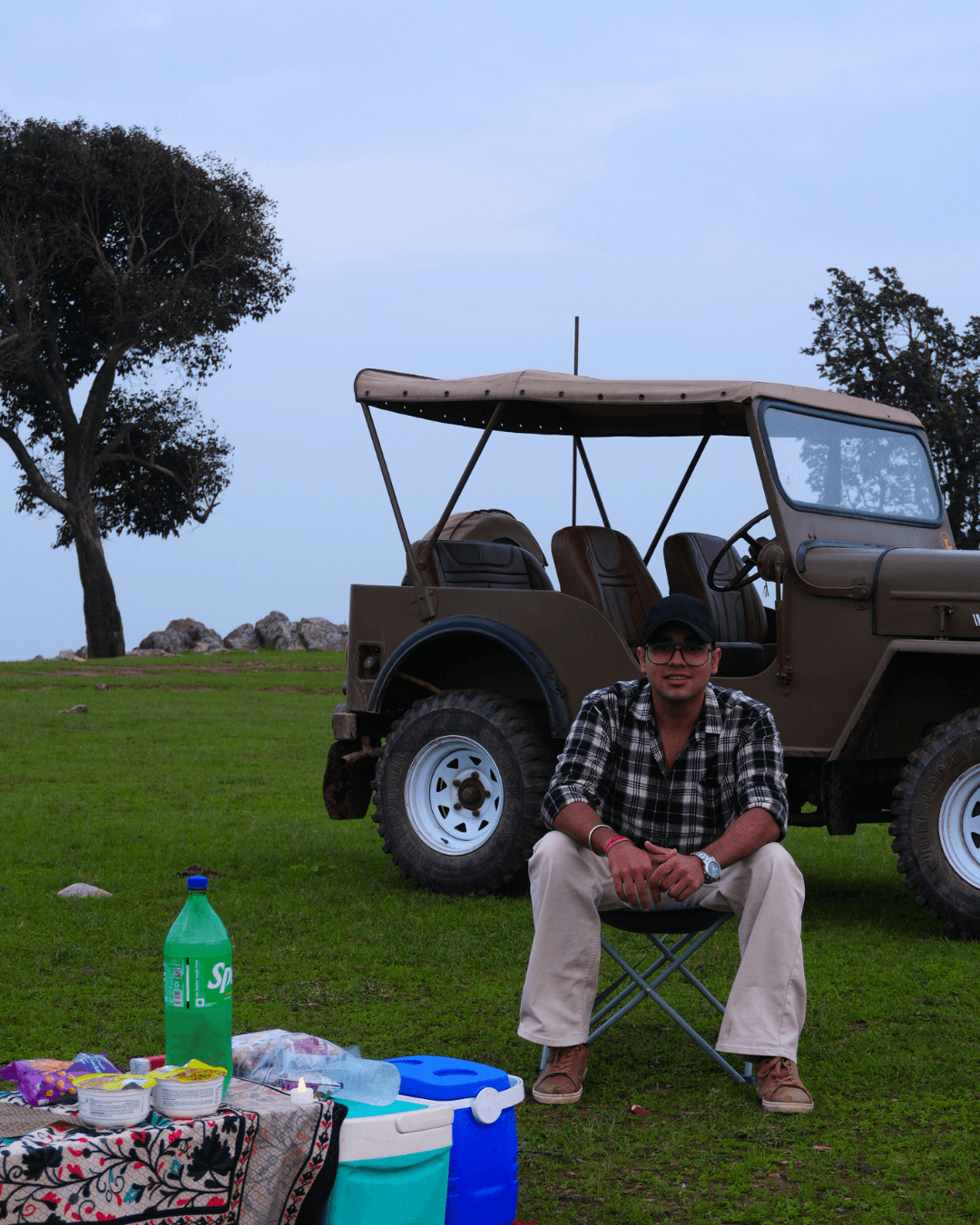
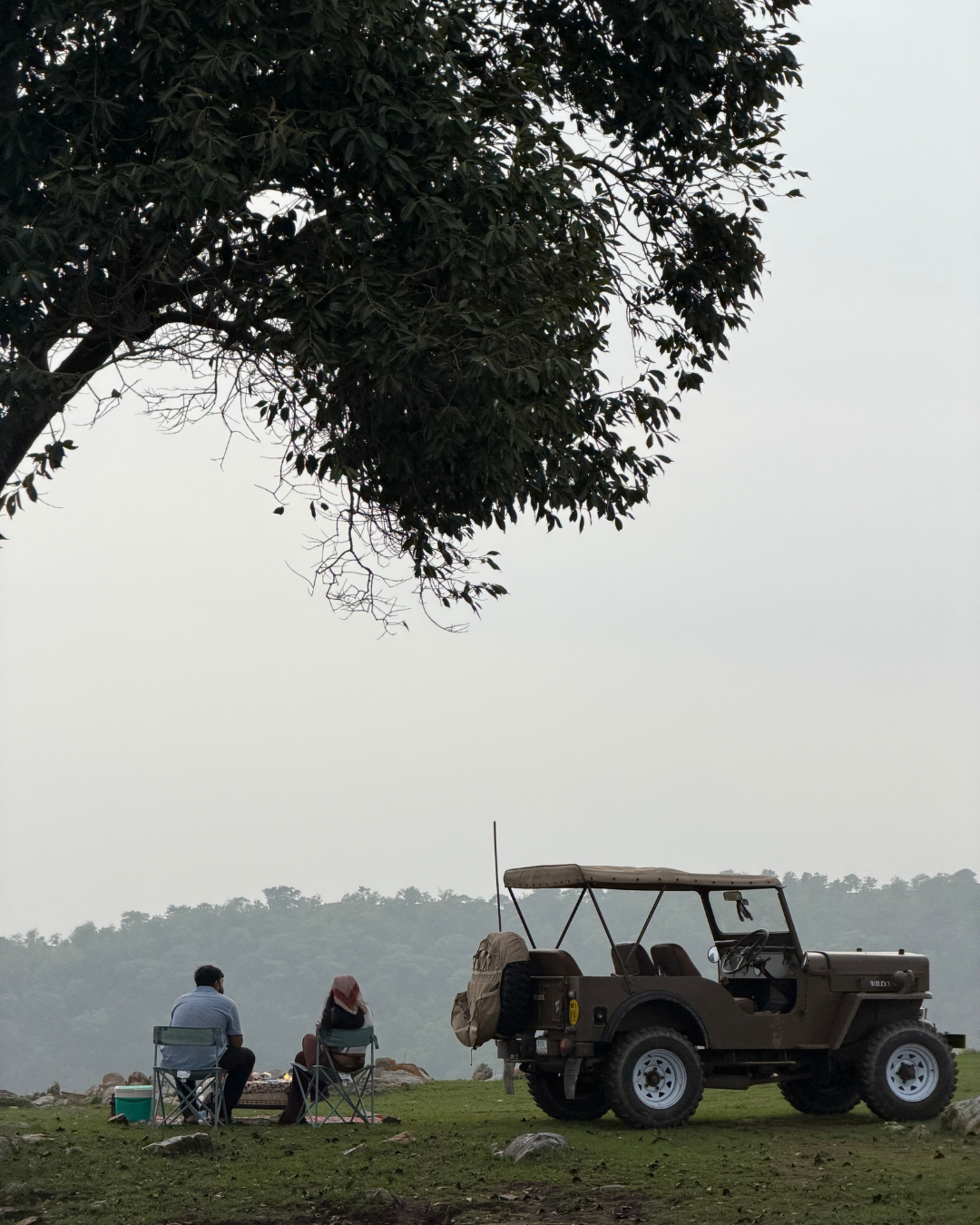
Ask an older driver in a Rajasthan village to describe a jeep and there's a good chance you'll hear about a Willys: the flat bonnet, round headlamps set into a slotted grille, a canvas roof that flaps once the road gets fast, and a gear lever that wants a firm hand.
For decades the Willys jeep was one of the few vehicles that could handle rough village roads, carrying wedding parties and milk cans up hills that buses avoided. Most of them have gone now. People still search for them every day, though. Some want the history or are trying to identify an old jeep they've found in a shed. Others just want to ride in one before they disappear.
We run restored Willys jeeps on trails around Udaipur, so the last part of this guide is practical: where you can still ride one, and what it feels like.
What is a Willys jeep?
A Willys jeep is the small four-wheel-drive vehicle that Willys-Overland built for the US Army in World War II, mainly the Willys MB of 1941 to 1945. After the war, Willys sold civilian versions called CJs. Mahindra & Mahindra began assembling them in India in 1947, which is why so many Indians still call any old open jeep a "Willy jeep" (विली जीप).
Willys jeep history: from army scout car to everyday workhorse
In 1940 the US Army wanted a light scout car, and it wanted one quickly. A small company called American Bantam built the first prototype and delivered it to Camp Holabird on 23 September 1940. Willys-Overland and Ford built their own versions. In July 1941 Willys won the big order, for 16,000 vehicles, after reworking its MA design into the MB with ideas borrowed from the Ford and Bantam entries.
The MB ran on a 2.2-litre four-cylinder engine Willys called the "Go Devil", rated at 60 hp. That doesn't sound like much. But the whole jeep weighed about 1,100 kg, could carry three or four soldiers, and was built so a mechanic in a field could fix it with basic tools.
The Army needed more than one factory could make, so Ford built the same design as the GPW from January 1942. By 1945 Willys had built about 363,000 MBs and Ford about 280,000 GPWs.
(Where the name "jeep" came from, nobody knows for sure. It was army slang for untested vehicles and new recruits before the war, and a Popeye character called Eugene the Jeep made the word popular in 1936. Pick whichever story you like.)
When the war ended, Willys turned the same idea into a farm and work vehicle. The CJ-2A, for "Civilian Jeep", went into production on 17 July 1945. It added a tailgate and a side-mounted spare wheel, and it's often described as the first mass-produced civilian four-wheel drive.
YearWhat happened1940American Bantam delivers the first jeep prototype to the US Army1941Willys wins the main army order; the Willys MA becomes the Willys MB1942Ford starts building the same design as the GPW1941 to 1945About 363,000 Willys MBs and 280,000 Ford GPWs are built1945The civilian CJ-2A goes into production1947Mahindra & Mahindra gets the licence to assemble Willys jeeps in India1953The CJ-3B, with its taller bonnet, replaces the CJ-3A2010Mahindra stops making the Major, its last flat-fender jeepThe Willys jeep in India: why it's still called a "Willy jeep"
India's love affair with the jeep began in 1947, the year of Independence, when Mahindra & Mahindra got the licence to assemble Willys jeeps. The first ones assembled here were earlier flat-fender models like the CJ-3A and MB, and they kept the Willys badge on the bonnet. Mahindra's own CJ-3Bs followed from 1954, and the Indian Army used Mahindra CJ-3Bs until the late 1980s.
That badge is the reason for the name. For a whole generation, Willys simply meant jeep, the way people say Xerox for a photocopy. Ask for a "Willy jeep" or "विली जीप" in small-town Rajasthan and people still know exactly what you mean, even if the jeep in front of them is a 1990s Mahindra.
Mahindra kept the same basic shape alive for more than 60 years and changed what was underneath. In 1975 the CJ 500D became the first Mahindra jeep with a factory-fitted diesel engine. The Major arrived in 2003, still clearly a CJ-3B underneath. Production finally stopped on 1 October 2010, when the Thar took its place, and the Major is often called the last flat-fender jeep to go out of production anywhere.
So if you see an old jeep on a Rajasthan road today, it's most likely a Mahindra built on the Willys design. A true American-built Willys is much rarer, which is part of why people get excited when they spot one.
Willys jeep models: how to tell them apart
Start with the grille. It's the quickest clue, and it saves you crawling under the jeep to look for chassis numbers.
ModelBuiltEngineHow to spot itWillys MB1941 to 1945, USA2.2 L "Go Devil" four-cylinder, 60 hpNine-slot grille, headlamps set back into the grille, no tailgateFord GPW1942 to 1945, USASame design as the MBAlmost identical to the MB; the wartime twinWillys CJ-2A1945 to 1949, USA (214,760 built)Go Devil, 60 hpSeven-slot grille, bigger headlamps flush with the grille, a tailgate, spare wheel on the sideWillys CJ-3A1949 to 1953, USA (131,843 built)Go Devil, 60 hpOne-piece windscreen with a vent, wipers at the bottomWillys CJ-3B1953 to 1968, USA (about 196,000 built)Hurricane four-cylinderTaller grille and bonnet, raised to clear the bigger engineMahindra CJ-3B and later modelsFrom 1954, India; the Major until 2010Petrol at first, Mahindra diesels from 1975The tall CJ-3B face, often with later Mahindra badges, seats and dashboardsA rule of thumb: a low, flat bonnet points to a wartime MB or an early CJ. A tall, upright bonnet points to a CJ-3B or one of the many Mahindra jeeps built on it.
And don't trust the badge alone. After 60 or 70 years of roadside repairs, plenty of old jeeps in India run on parts borrowed from other models. If you're buying one, have a mechanic who knows flat-fenders check it first.
What does a vintage Willys jeep ride feel like?
You hear it before you feel it. The four-cylinder starts with a slow, unhurried cough, then settles into a beat you can feel through the floor. Once you're moving there's no glass bubble around you, just the windscreen, the wind coming over it and whatever the road smells like that morning. After rain on the Aravalli tracks, that's engine oil and wet earth.
It's not a smooth ride, and we don't pretend otherwise. When we restore a jeep, we keep it honest: period-correct paint, canvas stitched the old way, and the dents it earned left where they are. We don't add modern seats, soften the suspension or seal the cabin, because that's exactly the feeling people come for. The engineering money goes where you can't see it: brakes, lights and the hidden work that keeps an old jeep safe on today's roads.
You also don't drive it yourself. Every GoWilly jeep comes with a Trail Captain at the wheel, so you don't need a licence, and you don't need to learn a 1940s gearbox on a hill road.
Vintage Willys jeepModern safari SUVFeel of the rideFirm and bumpy; you feel the roadSoft and quietAir and viewsOpen on all sides, wind in your faceMostly behind glassPaceUnhurried; made for looking aroundFaster between stopsPhotosThe jeep is part of the pictureThe vehicle stays out of the shotBest forShort trails, sunsets, celebrations, people who like old machinesLong highway distances, anyone who needs a cushioned seatIf you have back trouble or you're pregnant, mention it when you book. The Aravali off-road trail is the roughest of our three, while the Blue Odyssey lake tour, which shows Udaipur's calmest side by the water, is the easier choice.
Where to ride a Willys jeep in Udaipur
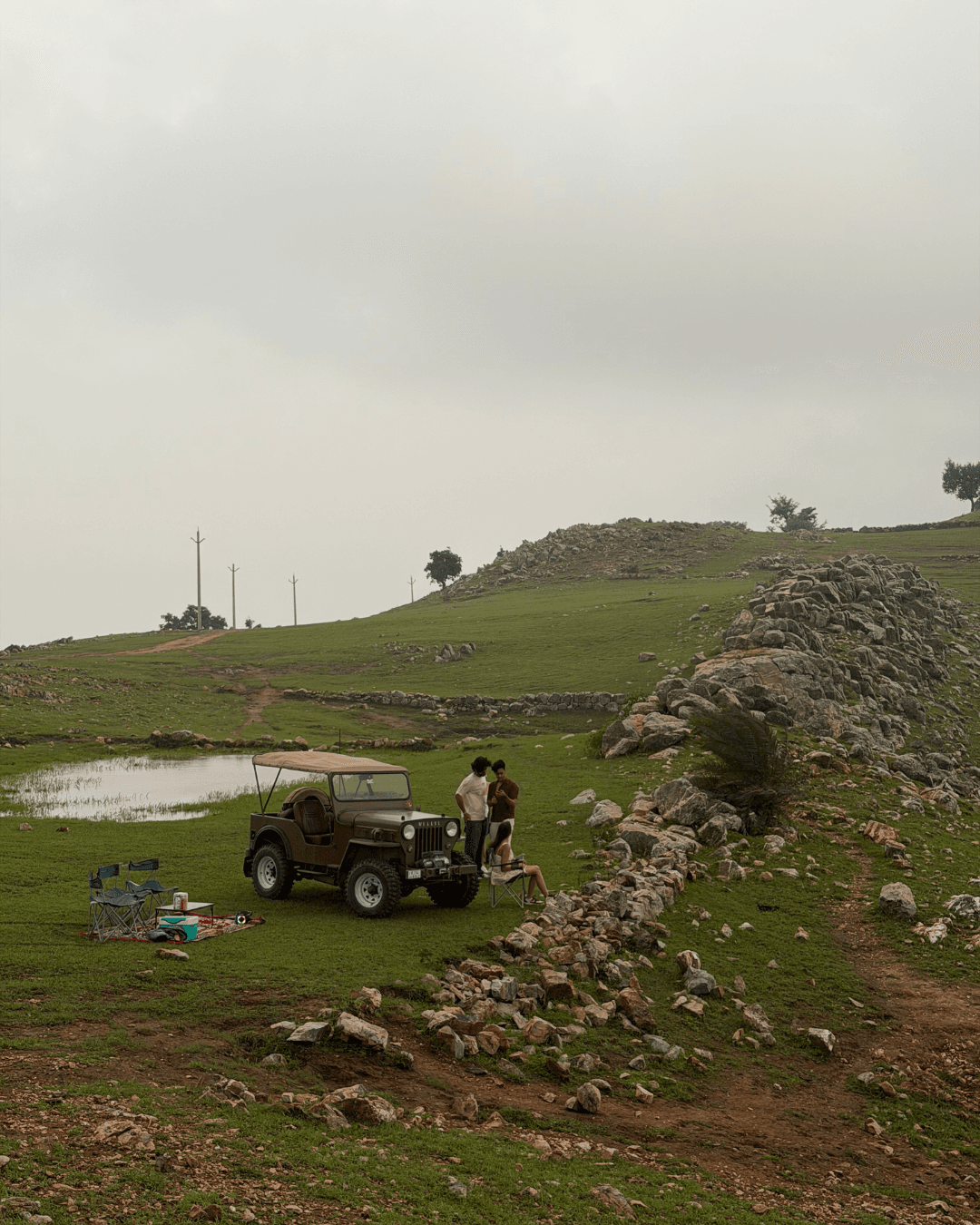
Udaipur suits an old jeep. The city is small enough to cross slowly, and the Aravalli hills start almost at its edge, with village tracks that were made for exactly this kind of vehicle.
We run three set trails, all in a private Willys jeep with your own Trail Captain. Every one of them is a half-day.
TrailTimeWhat you'll seePick it ifUdaipur heritage jeep safari5 to 6 hoursThe royal heritage of Mewar: old city lanes, palaces and fortsIt's your first time in UdaipurBlue Odyssey lake tour4 to 5 hoursUdaipur's lakes and its calmer side by the waterYou want a slow, easy ride and good light for photosUnexplored Aravali off-road trail4.5 to 5 hoursThe raw, untouched side of the Aravalli hillsYou want dirt tracks and the jeep doing what it was built forNone of them fits? Design My Trail lets you build your own route: a birthday drive, a proposal, a sunset picnic or another celebration.
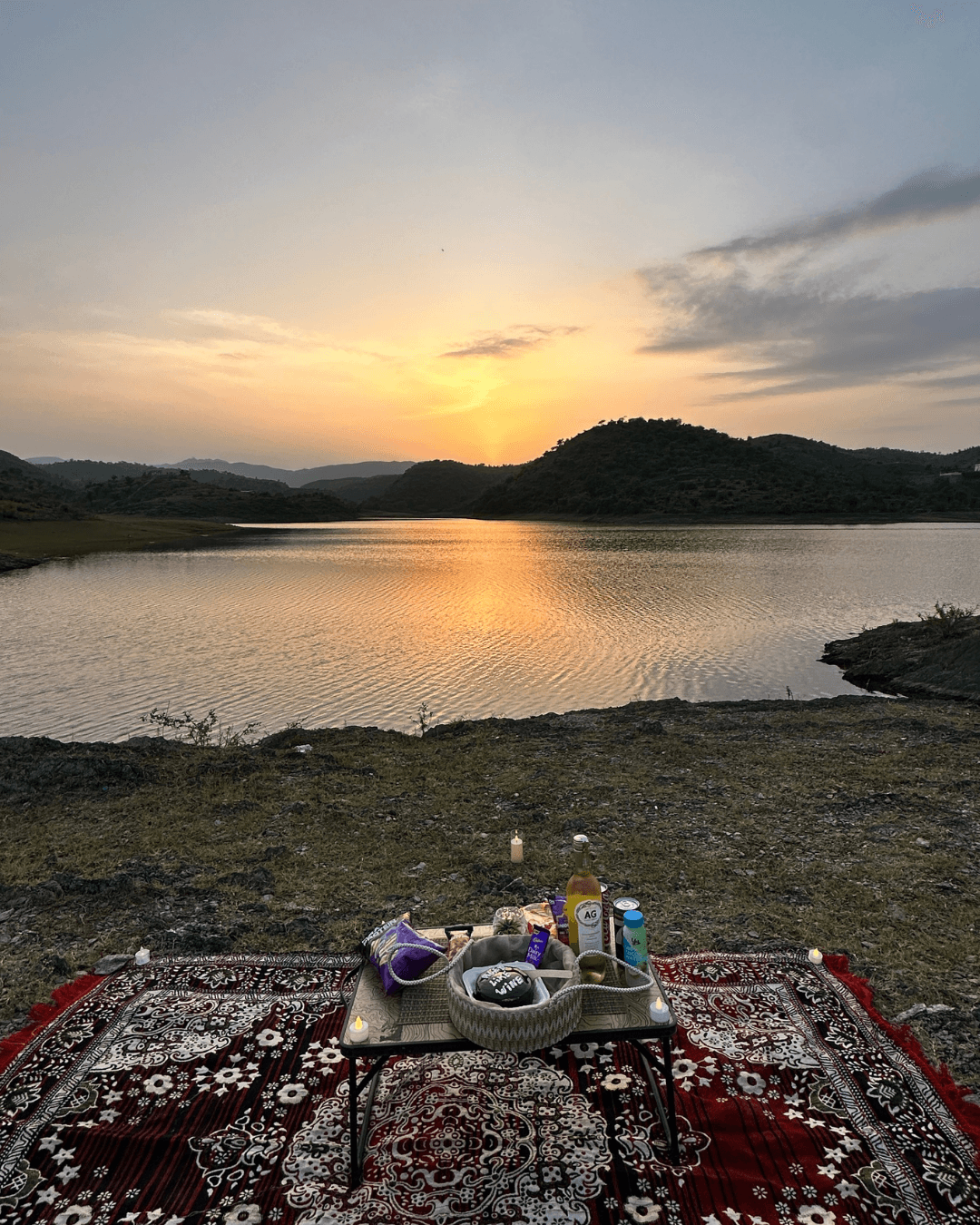
For ideas, our guide to jeep safari in Udaipur compares the city and hill routes. The Aravali hills tour guide covers what you'll see up in the hills, and the open jeep safari at sunset post is for anyone who wants golden hour from the back of a Willys. If you want to fill the rest of your trip, here are the other adventure activities in Udaipur worth a morning.
We aren't a self-drive rental, so we don't hire out jeeps by the hour or the day. Every GoWilly ride is private and comes with a Trail Captain.
Willys jeep FAQs
Is a Willys jeep the same as a Mahindra jeep?
They share the same design but not the same badge. Mahindra & Mahindra took a licence from Willys in 1947 and went on to build its own jeeps on the CJ-3B design, right up to the Major in 2010. So most old "Willy jeeps" in India are actually Mahindras built on a Willys blueprint.
Are Willys jeeps still made?
No. Willys stopped building the wartime MB in 1945, and the civilian CJ-3B ended in the US in 1968. In India, Mahindra's Major, the last flat-fender jeep in production, was discontinued on 1 October 2010. Every Willys you see today is at least a few decades old.
Is it safe to ride in a vintage Willys jeep?
Yes, when it's looked after properly. Our jeeps are safety-certified and maintained by mechanics who know each one's quirks. We keep the original look and feel, but the brakes, lights and other hidden systems are brought up to the standard of today's roads.
Can I drive a GoWilly Willys jeep myself?
No. GoWilly isn't a self-drive rental. Every ride comes with a trained Trail Captain at the wheel, so you don't need a driving licence. You sit back, take photos and ask questions.
How long is a Willys jeep ride in Udaipur?
Our three set trails are half-day rides of about 4 to 6 hours: the heritage jeep safari (5 to 6 hours), the Blue Odyssey lake tour (4 to 5 hours) and the Unexplored Aravali off-road trail (4.5 to 5 hours). If you want something shorter, longer or planned around an occasion, use Design My Trail.
Ride one before they're gone
Most of the old Willys jeeps that once filled Indian roads have been scrapped or replaced. Keeping one running is slow work. Worn parts get mended instead of swapped, and the canvas is still stitched by hand, a craft our mechanics learned from the generation before them.
If you're in Udaipur, give yourself one afternoon in one. Pick a trail from the table above, or tell us what you have in mind on Design My Trail, and we'll handle the rest.