There is a version of Udaipur that most visitors get, and it is a perfectly decent one. A car arrives at your hotel, you do City Palace before the queue builds, you cross to Saheliyon Ki Bari, you eat somewhere with a lake view, and you finish at Sajjangarh with three hundred other people watching the same sunset. By evening you have seen the city. You have also spent about four hours of the day looking at it through a closed window.
A Udaipur jeep safari rearranges that. You sit in an open vehicle, someone else drives, and the road between the stops stops being wasted time. The city looks different at eye level with no glass in the way, and the Aravalli hills that ring Udaipur turn from background scenery into somewhere you can actually go.
This is a guide to what that day involves: what a jeep safari here means, how the city routes differ from the hill routes, how it compares with a standard Udaipur sightseeing tour, and who it suits. Some of it is specific to GoWilly, who run restored willly Jeeps out of Udaipur. Most of it applies whoever you book with.
What a Udaipur jeep safari actually means
The word safari misleads people. There is no wildlife component here, no big cats, no early morning gate entry to a national park. A Udaipur jeep safari is about terrain and roads. You cover heritage quarters, lake edges, hill sections, and rural stretches in an open Four Wheel Drive, and the vehicle handles terrain that a sedan would not attempt.
That distinction matters when you are comparing options online, because the same word gets used for two quite different products in Rajasthan. In Ranthambore or Sariska, it means wildlife. In Udaipur it means landscape.
What you get instead is access and pace. Access, because an off-road capable Jeep can leave tarmac where a taxi turns around. Pace, because the itineraries are built around fewer stops held for longer, rather than a maximum number of sites crossed off before dark.
Why the vehicle changes the day more than you would expect
Anyone who has ridden in an open vehicle knows this already, but it is easy to underrate on paper. A closed car filters the place. You get the view and nothing else. In an open-sided willly you get the temperature dropping as you climb, woodsmoke from a roadside kitchen, the engine note changing on a gradient, wind that moves through the vehicle rather than around it.
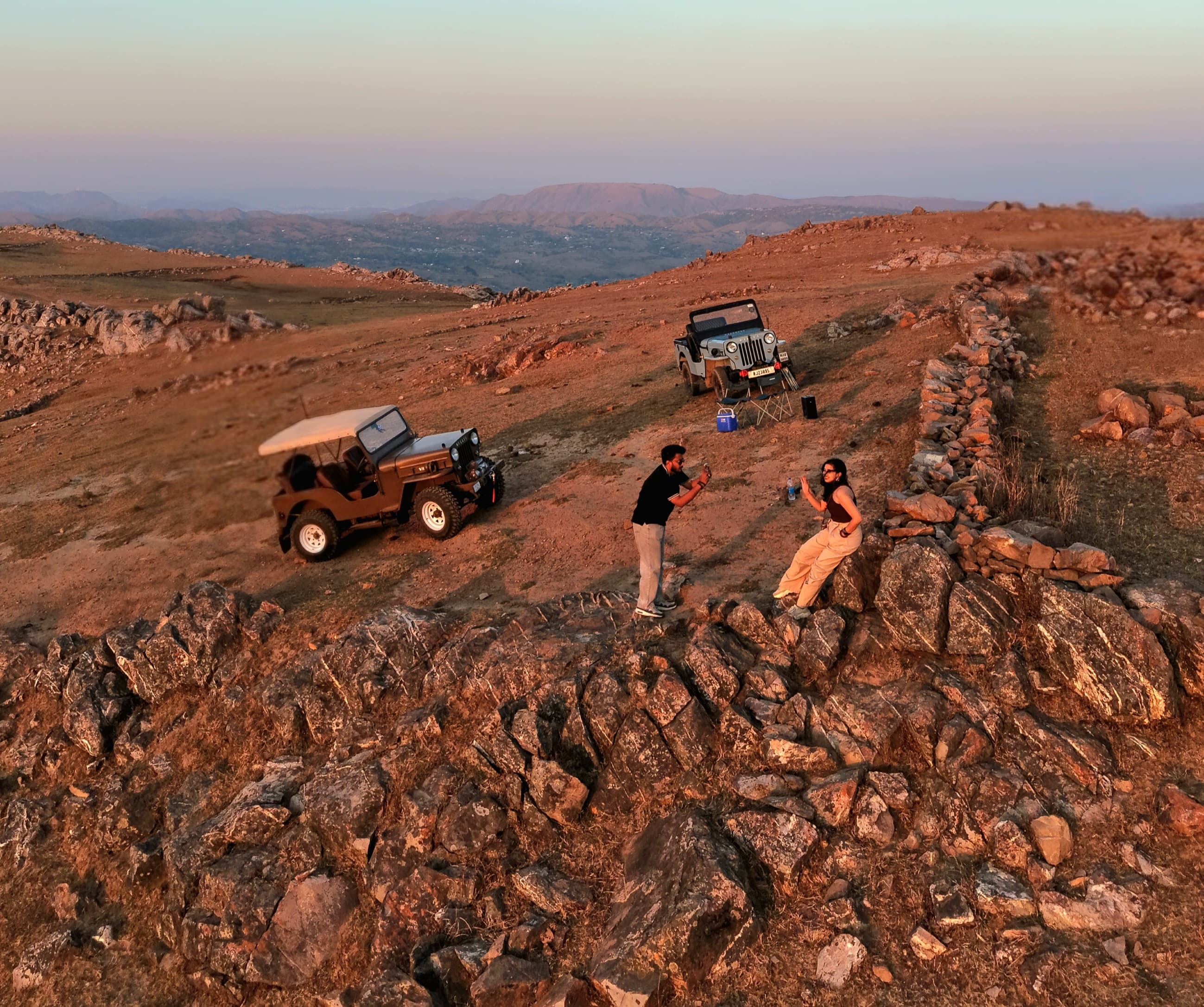
The practical benefit is photography. There is no window frame, no reflection, no pillar in the shot, and you can shoot in almost any direction without asking anyone to stop. Most people come back from a jeep safari with more pictures of the road than of the monuments, which tells you something about where the day's interest actually sits.
GoWilly runs a restored open-sided willly called Juniper on all its trails. A Trail Captain drives and guides, so nobody in your group is navigating, hunting for parking, or negotiating traffic. You do not need a driving licence and there is no paperwork on your side.
The city half: heritage streets at a slower pace
Udaipur's old city rewards an open vehicle in a way that surprises first-timers. The lanes are narrow, the buildings are close, and at street level you notice doorways, painted walls and small temples that vanish entirely from inside a car.
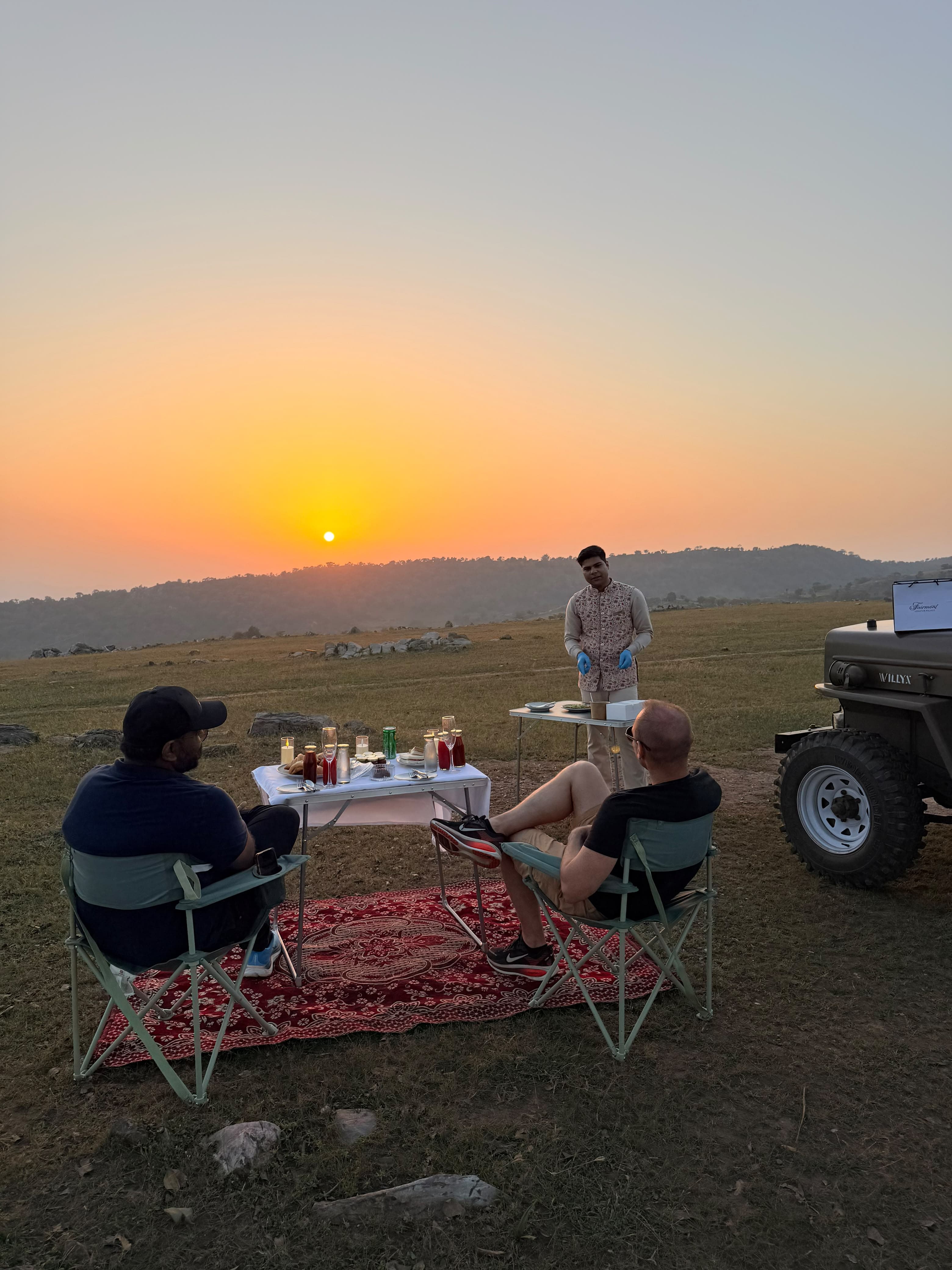
A half day heritage route usually covers the obvious anchors and treats the driving between them as part of the experience. Gowillly Udaipur Heritage Jeep Safari runs five to six hours and works roughly like this: around an hour and a half at the City Palace complex with Lake Pichola framed below, forty-five minutes at Saheliyon Ki Bari, the Jagdish Temple and old-city lanes, a scenic willly drive through the Aravalli foothills, then Sajjangarh for a panoramic sunset with high tea served at elevation.
The stop durations are the interesting part. Ninety minutes at City Palace is roughly double what a packed coach itinerary allows, and forty-five minutes in a garden is long enough to sit down in it. The route is graded easy and takes two to ten guests, with pickup and drop from your hotel inside Udaipur.
If you only have one day in the city and you want the famous sites without the conveyor belt feeling, this is the version to book.
The Aravalli half: where the road runs out
The Aravalli range is older than the Himalayas and it sits directly at Udaipur's edge, which most itineraries treat as a backdrop rather than a destination. Drive into it and the day changes shape. The city thins out behind you, roads narrow and start to bend, and rock, scrub and open valley take over. After the monsoon the whole range turns unexpectedly green, which catches people out who arrive expecting desert.
This is where a jeep safari stops being a nicer way to do sightseeing and becomes its own thing. Gowillly Unexplored Aravali off-road trail is a six to seven hour full day rated moderate and off-road. It leaves the city along Rani Road, spends two to two and a half hours on genuine off-road terrain through golden hills and open valleys, stops at dam viewpoints and remote spots chosen because the view opened rather than because a sign said to, passes quiet hamlets, and closes at a camping zone in the hills with high tea as the sun goes down.
The terrain is uneven and the ride is bumpy in places. That is the appeal for most people who book it, but it is worth knowing before you commit, particularly if anyone in your group has back trouble.
A third option: the lake route
Between the old city and the off-road hills sits a middle option that a lot of people overlook when they picture a jeep safari. Udaipur has more water than the two famous lakes, and the roads connecting them are some of the best driving in the region.
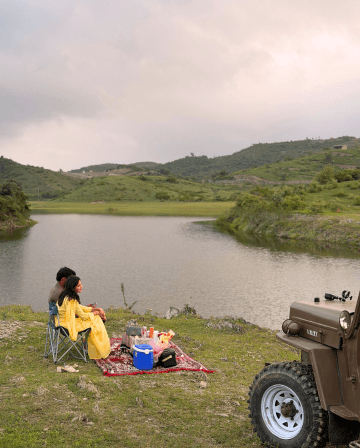
Gowillly Blue Odyssey covers four of them across six to seven hours: Lake Pichola to start, Fateh Sagar along the Rani Road shoreline, a long café stop at Badi Lake, and Madar Lake at dusk, which stays largely free of crowds. It is graded easy and scenic rather than adventurous, and the stop at Badi runs an hour and a half to two hours, which is unusual for any organised itinerary.
If the Aravalli route sounds too rough and the city route sounds too familiar, this is the one to look at. It is also the strongest of the three for anyone travelling with people who tire easily.
How it compares with a standard Udaipur sightseeing tour
A conventional Udaipur sightseeing tour is not a bad product. It is efficient, air-conditioned, usually cheaper, and it covers more ground in less time. If you have a single afternoon and a list of five monuments, a car and driver will beat a jeep safari on pure coverage.
The trade is depth against breadth.
Standard sightseeing tourUdaipur jeep safari
VehicleClosed, air-conditioned car or coachOpen-sided four wheel driveSites per dayMoreFewer, held longerTerrainPaved roads onlyPaved plus off-road, depending on trailThe driveTime between stopsPart of the experienceBest forCovering the checklistPhotography, hills, slower daysWeather sensitivityLowHigher, open vehicle Neither is the correct answer for everyone. A first visit with limited time and elderly parents probably calls for the car. A second visit, a honeymoon, a photography trip, or any day where you would rather see three things properly than seven things briefly, points at the Jeep.
Plenty of people do both, using a standard tour for the museums and ticketed interiors and a jeep safari for the landscape and the light. That combination works particularly well on a three day trip, where day one handles the monuments and day two goes into the hills without any overlap.
What a day actually looks like
Pickup is from your hotel inside Udaipur city at a time you choose, which matters more than it sounds, because the difference between a nine o'clock start and a seven o'clock start in March is the difference between soft light and glare.
From there the shape depends on the trail. A heritage day moves through the old city while it is still cool, breaks in the middle at gardens or a temple, then climbs into the foothills as the heat drops and finishes high with tea. A lake or off-road day inverts that, getting the distance done early and saving the best light for the final stop.
The consistent thing across Gowillly trails is that the pacing is deliberately unhurried. Stops run long, the drive counts, and nothing is timed to the minute. You will get back to your hotel later than a packed itinerary and with fewer ticket stubs.
Who a jeep safari suits, and who it does not
It works well for couples, small groups of friends, photographers, and repeat visitors who have already done the monuments once and want the surroundings instead. Families with older children usually enjoy it. Anyone who finds group tours tiring will find a private Jeep a relief, because bookings run private to your travelling group of two to ten guests and you never share the vehicle with strangers.
It works less well in a few situations, and it is worth being honest about them. Off-road routes are physically bumpy, so they are not the right choice for anyone with significant mobility or back issues. An open vehicle in peak May heat is hard work unless you start at dawn. During heavy monsoon rain, an open Jeep is exactly as wet as it sounds. And if your priority is maximum sites per rupee, a standard Udaipur sightseeing tour will serve you better.
What is included
Gowillly trails include the private restored willly, a dedicated Trail Captain who drives and guides in English or Hindi, fuel, tolls, parking, permits and state taxes, hotel pickup and drop within Udaipur city, bottled water and trail refreshments, and support before and during the tour. There is no deposit and no paperwork at your end.
Monument and camera fees are not included, and neither are meals outside the itinerary, personal expenses or travel insurance. Pricing is quoted per enquiry, since it depends on your date, group size and any additions, with GST charged on the final quote. Pickups outside the city can be arranged on request.
Best time of year, and best time of day
October to March is the comfortable window and it is the season listed across Gowillly trails. Days are mild, evenings are cool, and an open vehicle is pleasant at almost any hour.
Monsoon, roughly July through September, is the most dramatic time to be in the Aravalli. The hills green up, the lakes fill, and the light turns moody. Rain will interrupt an open-vehicle day, so it is a genuine trade rather than a straightforward win.
Summer is hot and best handled by starting early. Tours run year-round, with earlier departures in the hotter months to use the cooler hours.
Time of day matters as much as season. The two hours after sunrise and the two before sunset are when Udaipur's stone goes warm and the hills separate into layers. If you can only pick one, take the afternoon-into-evening slot.
Practical tips before you go
Wear clothes you do not mind getting dusty and shoes you can walk in. Off-road sections kick up a lot of dust, and light colours show it.
Bring sunglasses. Wind and glare in an open vehicle add up faster than you expect, and sunscreen is worth applying even in December.
Carry a light layer even in warm months. An open Jeep is breezy while moving and noticeably cold at elevation after sunset.
Keep your camera or phone somewhere you can reach in a second rather than in a bag at your feet. The best frames on these routes arrive without warning and do not wait.
Tell your Trail Captain what you actually care about at the start of the day. If you are chasing light, travelling with someone who needs shorter stretches, or marking an occasion, saying so early changes how the day runs.
Booking one
Every GoWilly booking runs as a private experience for your own group. You choose the trail, they quote on your date and group size, and a Trail Captain takes the wheel. If you are deciding between the city heritage route and the off-road Aravali day, the honest answer is that they do different jobs, and most people who do one end up curious about the other.
You can compare durations, stop lists and inclusions across all of Gowillly Udaipur jeep safari trails before you commit.
FAQs
1. What is a Udaipur jeep safari?
It is a sightseeing experience run in an open four wheel drive rather than a closed car, covering heritage sites, lake roads and the Aravalli hills around Udaipur. Despite the name, it has no wildlife component. The focus is terrain, scenery and unhurried stops, with a driver-guide handling the route so you can concentrate on the view.
2. How is a jeep safari different from a normal Udaipur sightseeing tour?
A standard tour is efficient and air-conditioned and covers more sites in less time. A jeep safari covers fewer sites but holds each one longer, adds off-road terrain a car cannot reach, and treats the drive itself as part of the day. It suits photography and slower travel. A conventional tour suits tight schedules and full checklists.
3. How long does a Udaipur jeep safari take?
It depends on the route. Gowillly Udaipur Heritage Jeep Safari runs five to six hours as a half day covering City Palace, Saheliyon Ki Bari and Sajjangarh. The lake and off-road Aravali trails run six to seven hours as full days. All three include hotel pickup and drop-off within Udaipur city at a start time you choose.
4. Is a jeep safari suitable for families and older travellers?
City and lake routes are graded easy and work well for most groups, including families with children. The Unexplored Aravali route is graded moderate and off-road, with genuinely bumpy terrain, so it is less suitable for anyone with back or mobility problems. Group sizes run from two to ten guests, and each booking is private to your group.
5. When is the best time of year for a Udaipur jeep safari?
October to March is the most comfortable season, with mild days and cool evenings. Monsoon, from July to September, gives you green hills and full lakes but carries a real chance of rain in an open vehicle. Summer tours run with early morning starts to avoid the worst heat. Late afternoon into sunset gives the best light year-round.