Rajasthan is usually seen through glass, the tinted window of a coach, the viewfinder of a hurried camera, the screen of a phone held up between the traveller and the land. The forts get photographed, the lakes get admired, and somewhere in the rush from one landmark to the next, the place itself slips quietly out of the frame.
Slow travel is not about doing less. It is about noticing more. When you trade the highway for the hill road and the schedule for the unfolding day, Rajasthan stops being a backdrop and becomes a companion, one with an extraordinary amount to say, if you give it room to speak.
The Pace of an Open Jeep
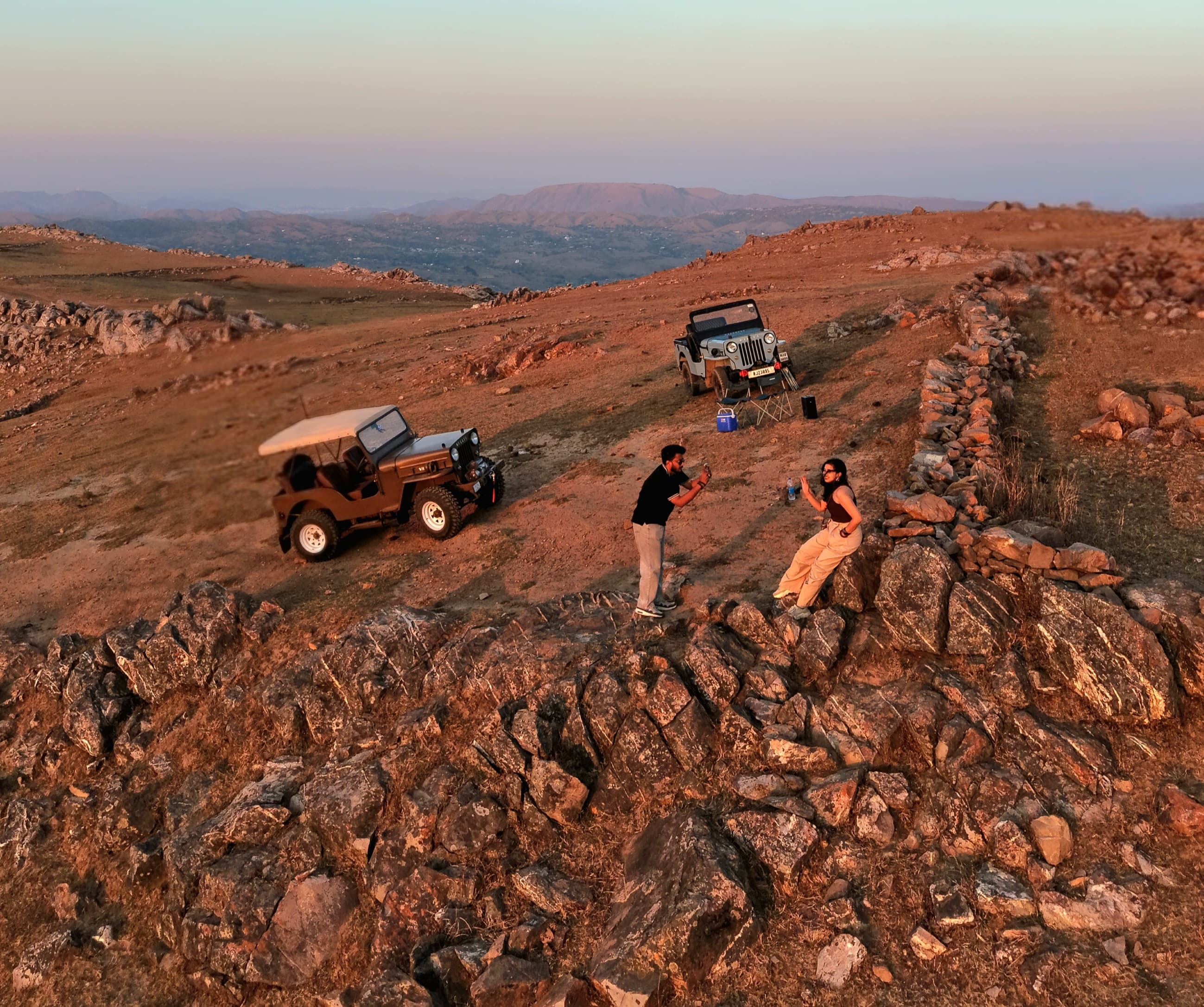
There is a reason we drive restored Willys Jeeps and not air-conditioned vans. At thirty kilometres an hour, with no glass between you and the morning, the land arrives unfiltered, the smell of rain on warm stone, the temperature dropping as the road climbs into the Aravallis, the precise moment the city's noise gives way to wind and birdsong.
An open jeep makes you a participant rather than a spectator. Villagers wave because they can see your face. You stop for a chai stall because you smelled the cardamom before you saw the kettle. The vehicle becomes less a means of transport and more a way of paying attentionWhat the Itinerary Leaves Out
The most quoted sights of Rajasthan are magnificent, and they deserve their fame. But the state's deeper character lives in the spaces between them, in the lakeside ghat where laundry dries like prayer flags, in the banyan tree that has shaded the same crossroads for two hundred years, in the conversation with a shepherd who knows every fold of the hills by name.
These moments cannot be booked in advance. They can only be made possible, by a route that wanders, a driver who knows when to pull over, and a day with enough slack in it for the unplanned to happen. Slow travel is simply the discipline of leaving that door open.
Slow travel is not about doing less. It is about noticing more, trading the schedule for the unfolding day.
Time Behaves Differently Here
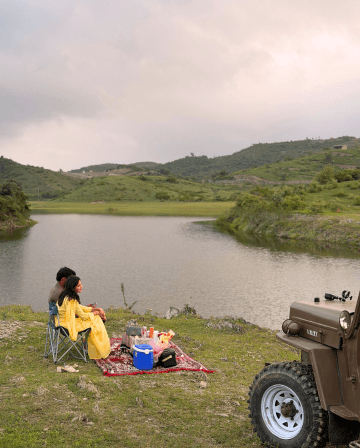
Something happens to time on the third hour of an unhurried drive. It loosens. The mental checklist dissolves, and you find yourself measuring the afternoon not in minutes but in light, the way the lake turns from silver to gold, the lengthening shadows of the hills, the first lamps appearing in village windows.
Psychologists have a term for this state; travellers have always simply called it being somewhere. It is the difference between visiting Rajasthan and actually meeting it, and once you have felt it, the old way of travelling, ticking monuments off a list through a coach window, becomes very hard to return to.
The Long Return
Months after a journey like this, the photographs will show you what you saw. But it is the slower senses that hold what you felt, the warmth of the seat-back in the sun, the rhythm of the old engine, the taste of roadside chai sweetened beyond all reason.
That is the quiet wager of slow travel: that a journey measured in moments rather than milestones will outlast every souvenir. In Rajasthan, a land that has never once been in a hurry, it is a wager you will win every time.