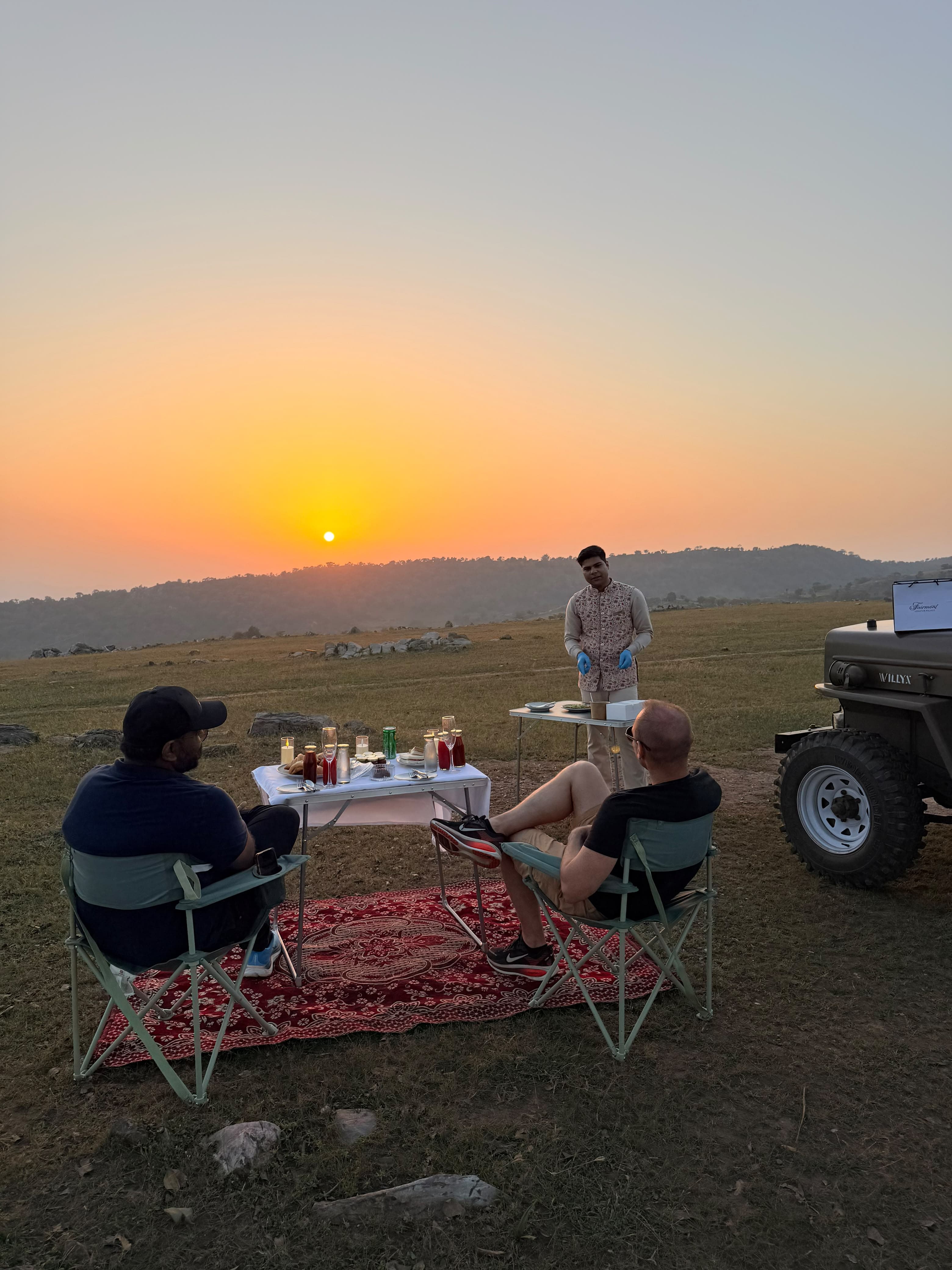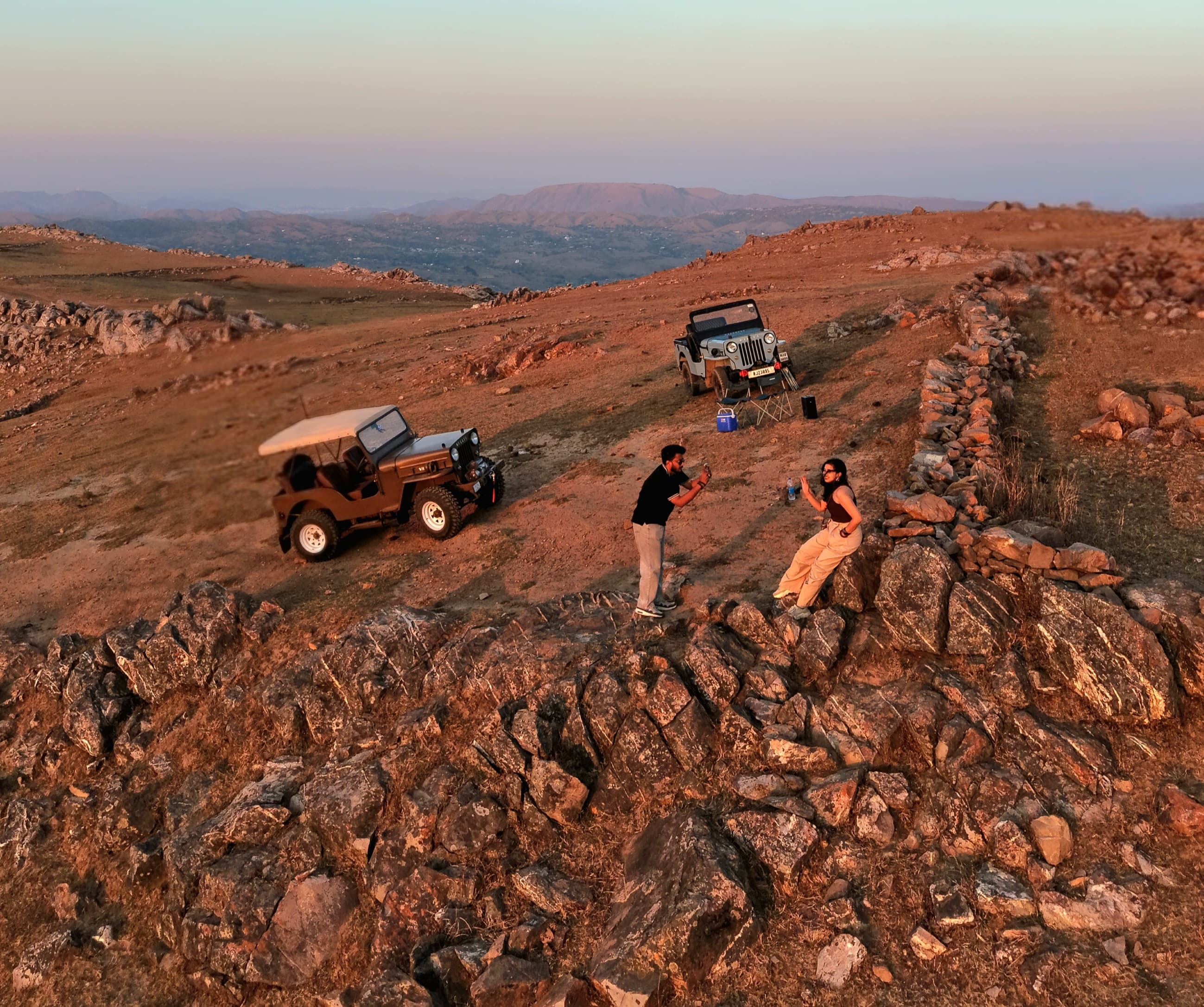
No one has ever finished a GoWilly trail and talked first about the kilometres. They talk about the chai. Or the mirchi vada eaten standing up at a crossroads stall, or the lunch that appeared, course by unhurried course, in a village courtyard that does not appear on any map of restaurants.
We did not plan for food to become the quiet headline of these journeys. But the road decided otherwise, and we have long since stopped arguing with the road.
The First Chai of the Morning
Somewhere in the first hour of every trail there is a chai stop, and it is never negotiable. The stall is usually three generations old, the kettle older, and the recipe a closely guarded act of intuition, milk, dust of cardamom, ginger crushed on a stone, and sugar in quantities we have learned not to question.
It arrives in small steel tumblers, too hot to hold, which is the point: chai enforces its own pace. You stand, you sip, you watch the village wake up around you. Ten minutes later the jeep starts again and the day has officially begun.
What the Villages Taught Us About Lunch
The best meals on the trail are not catered; they are shared. Over the years, families along our routes have become friends, and lunch at their homes has become the heart of the long trail days, bajra rotla still warm from the chulha, ker sangri from the family's own recipe, dal with a smokiness no city kitchen manages, and buttermilk that ends all arguments about what to drink in the heat.
The recipes here are not written anywhere. They are remembered, hand to hand, the way the trails themselves are.
Eating this way comes with its own etiquette, seconds are not an offer but a certainty, and refusing a third helping requires diplomatic skill. We advise surrender.A Word About the Roadside Fryer
Rajasthan's roadside snack culture deserves its own monument. The mirchi vada, a green chilli stuffed, battered, and fried with complete confidence, is the trail's unofficial mascot. There are also kachoris that shatter properly, pakoras that appear the moment it rains, and jalebis pulled hot from the pan in the late afternoon, sweet enough to make the last hour of driving noticeably more cheerful.
Our drivers maintain strong, researched opinions about which stall does which snack best. These opinions are part of the route planning. We are not ashamed of this.
Why Food Tastes Better at Thirty Kilometres an Hour
There is no mystery to it, really. Appetite is built by wind and morning light, and a meal means more when you have watched the land it came from roll past all day. The wheat field and the rotla, the herd and the buttermilk, the chilli patch and the vada, on a slow road, the connections stay visible.
So come hungry. The Aravallis will handle the scenery; the road will handle the rest.