Every city keeps its truest self just beyond its edges. Udaipur, for all the splendour inside its palace walls, is no different. Drive twenty minutes past the last guesthouse and the city of lakes reveals what made it possible in the first place, the catchments, the hill passes, the quiet waterlines that the Mewar kings read like scripture.
This is a journey about leaving, in the gentlest sense of the word. Not escaping the city, but following its story upstream, out along the roads where the lakes are wilder, the light is older, and the only crowds are herons.
Following the Waterlines
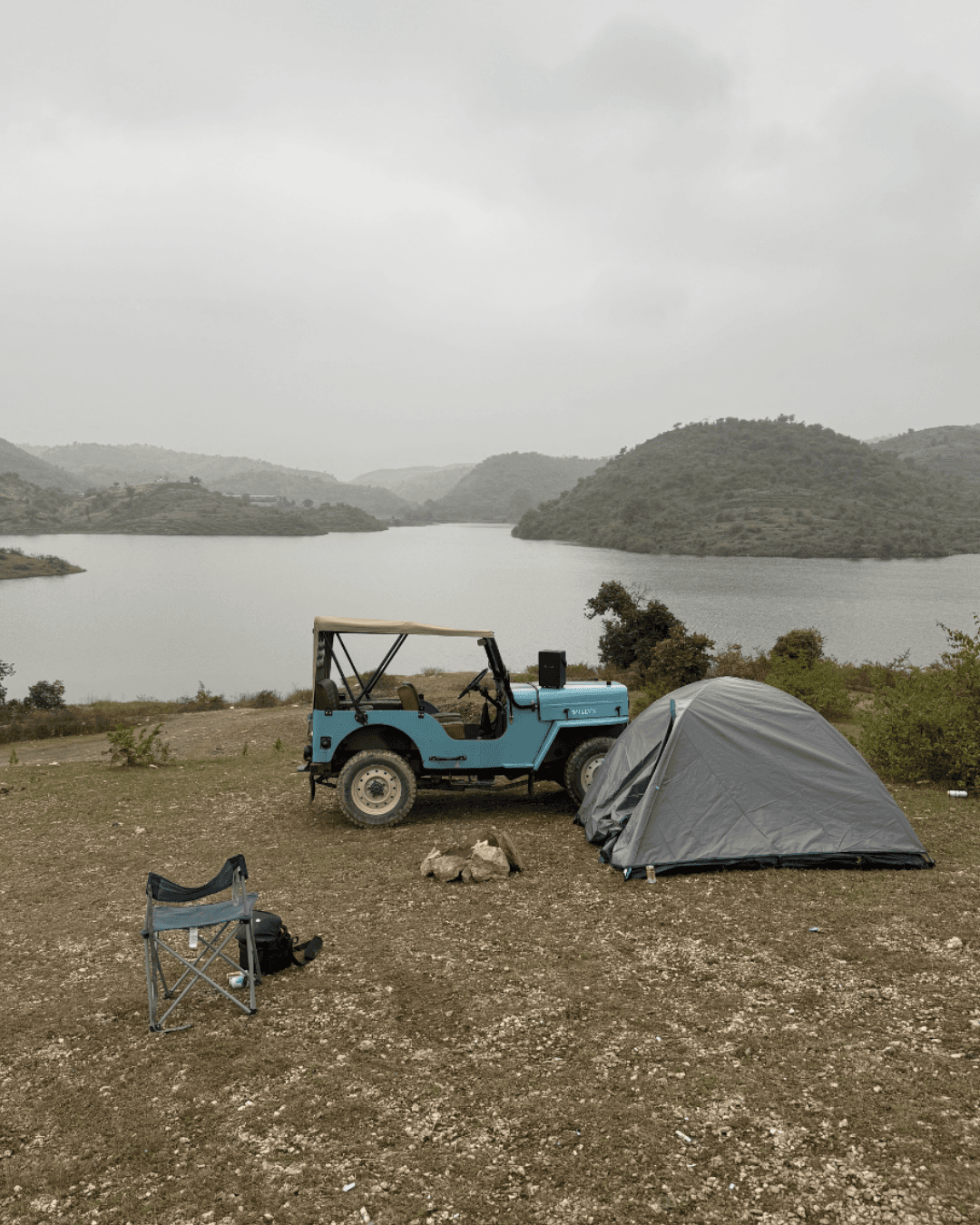
The lakes of Udaipur are not ornaments; they are a system, a centuries-old conversation between rainfall and stone. Fateh Sagar feeds into Pichola, Badi waits in the hills as the city's quiet insurance, and Madar sits farther still, remembering monsoons that the city has long forgotten.
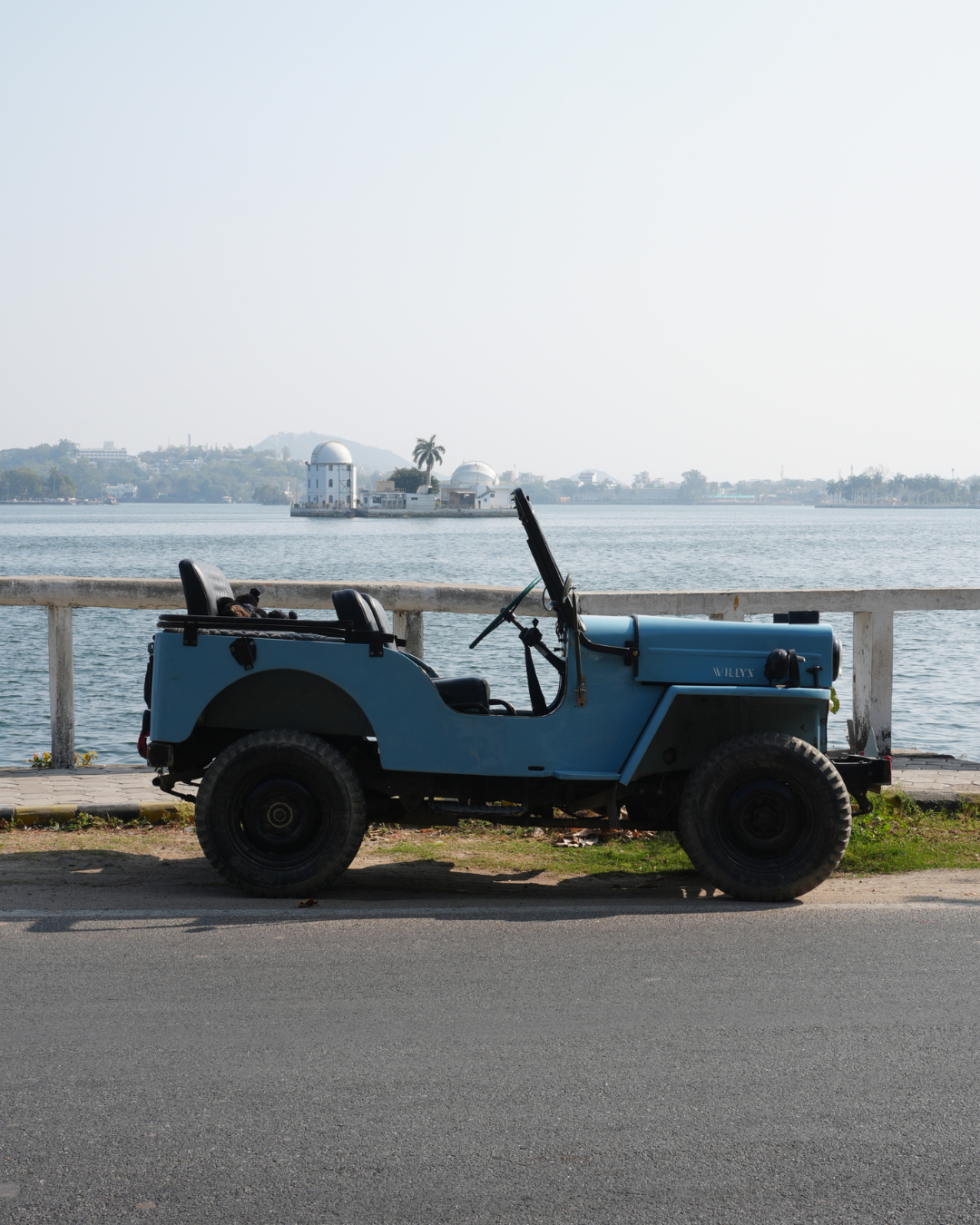
To drive the waterlines in an open jeep is to read that system in the original. You watch the embankments rise and fall, see the old sluice gates still standing duty, and begin to understand that the romance of the lake city was always, underneath, a feat of patient engineering.
The Hour the Hills Turn Gold
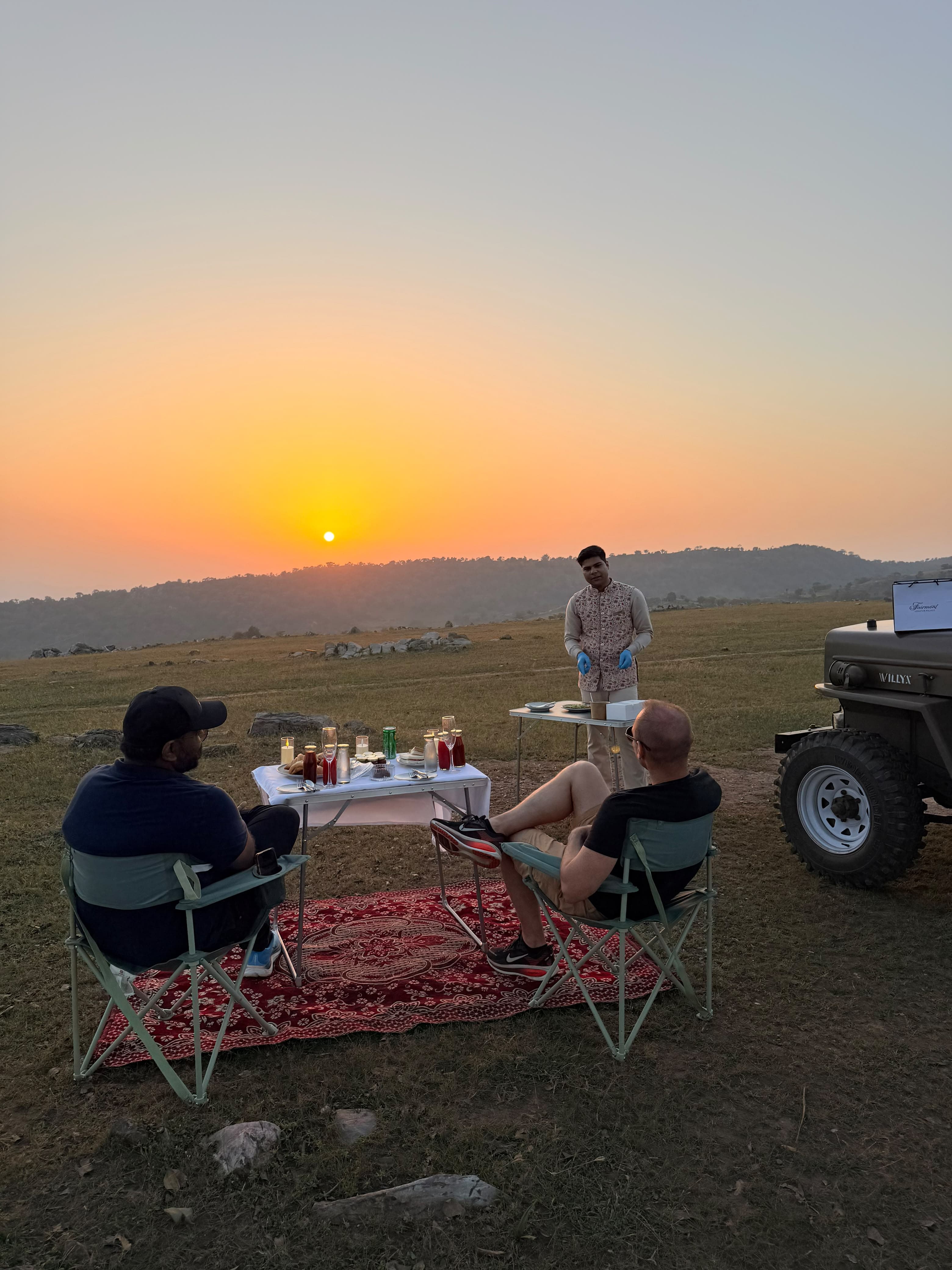
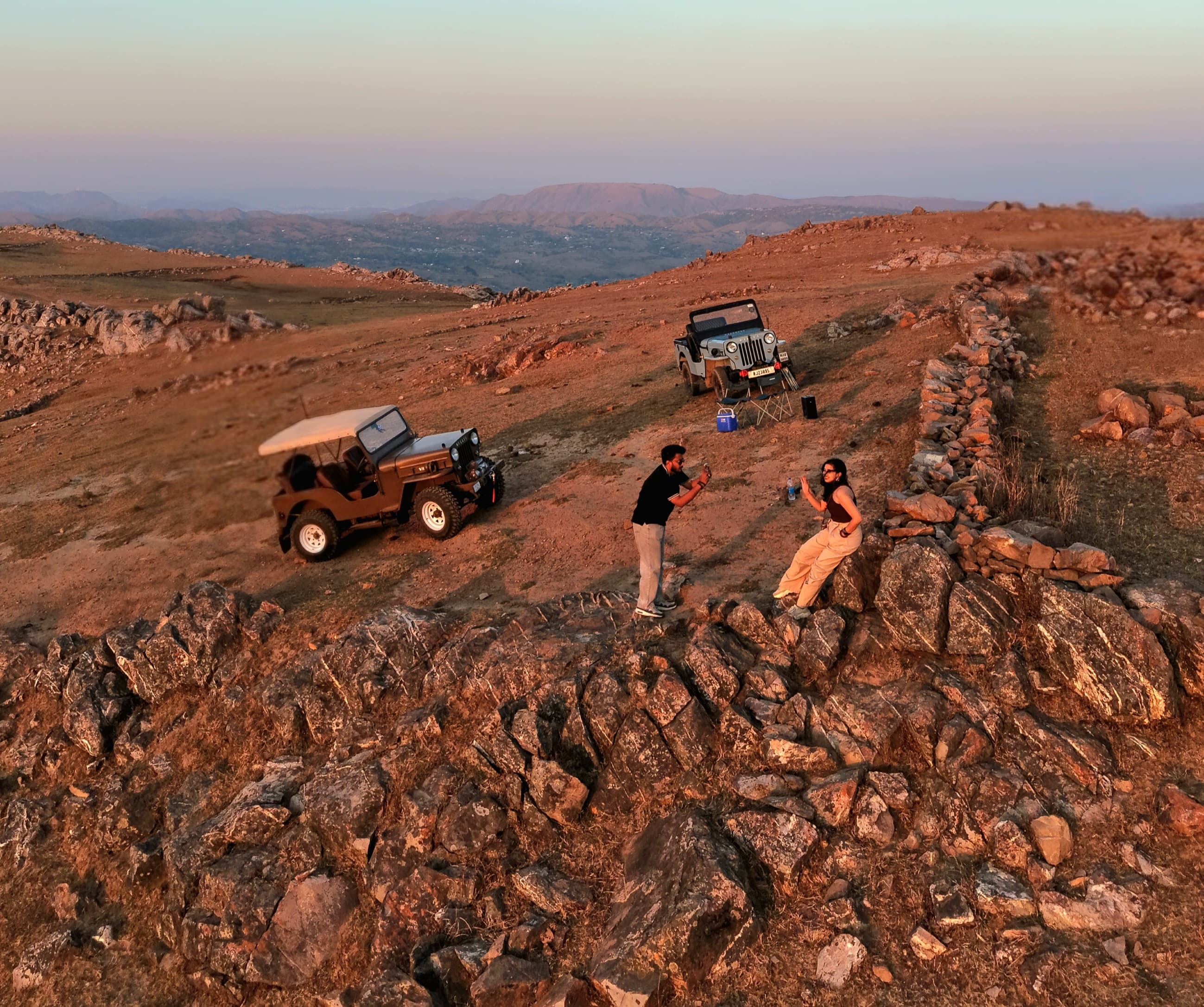
Late afternoon in the Aravallis is a slow ceremony. The light thickens, the ridgelines sharpen, and the water, silver all day, begins its long turn toward amber. We time the trail so that this hour finds you somewhere worth standing still: a dam wall with the wind coming off the water, a hillside clearing where the city is just a soft glitter in the distance.
No photograph quite survives contact with this hour. The best ones come close, but the light here is less something you capture than something you stand inside.
The light here is less something you capture than something you stand inside.
Where the Road Forgets the Map
Past Badi Lake the tarmac loosens its grip, and the trail becomes the kind of road that maps record only reluctantly. The jeep comes into its own here, the same sure-footed machine that crossed harder country than this eighty years ago, now carrying you over rock-cut tracks toward landscapes that have never needed a name.
It is in these unmarked stretches that the journey changes register. Conversation falls away. The land does the talking, an eagle riding the thermals, a dry streambed waiting for July, the long blue recession of hills that the Mewaris once read as the edge of the world.
Coming Back Changed
The return drive happens at dusk, with the lamps of the city rising to meet you. It is the same skyline you left that morning, but it does not look the same, because now you know what stands behind it: the lakes in the hills, the old water wisdom, the silence the palaces were built to overlook.
That is what leaving the city offers, in the end. Not distance from Udaipur, but a deeper way of returning to it. The palace walls glow a little differently once you have followed their story to the source.